Research
Publications
Political Representation in Danish Local Democracy (With Martin Vinæs Larsen). 2025. Politica.
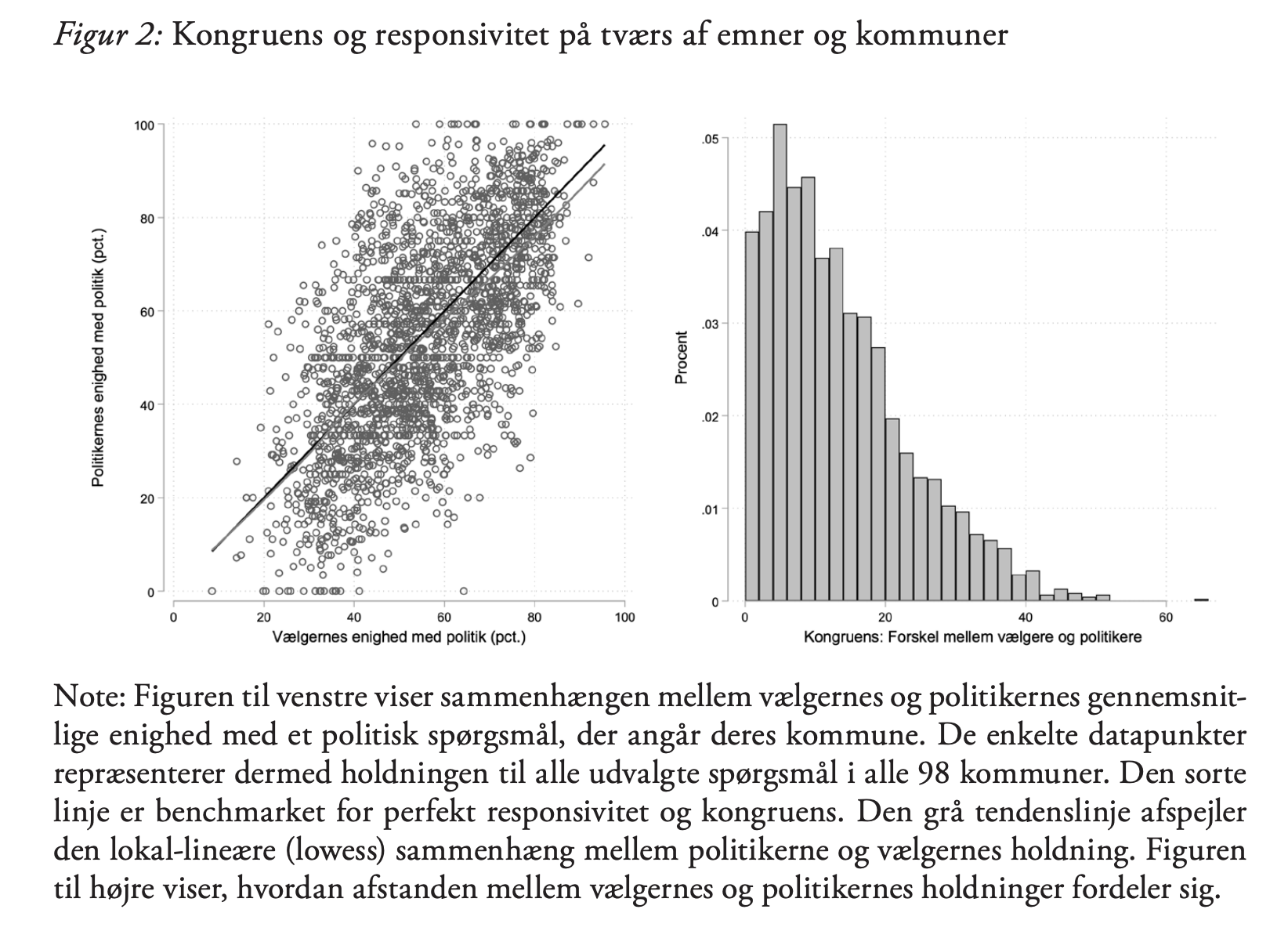
Local politicians play a pivotal role in Danish democracy, but little is known on how well they represent their constituents. This is hard to study, as it requires comparable data on the political preferences of politicians and voters. We overcome this issue by comparing the attitudes of local politicians on a wide range of local political items given to a Voting Advice Application before the 2021 municipal election to a nationally representative survey we field in 2023 (n = 28,817). We find a strong relationship between citizen and politician preferences across local issues and municipalities. We also examine whether homeowners are better represented than renters. This is not the case, as we show that owners and renters mostly agree on local policy, and they are represented proportionally to their share of the population.
Working Papers
Reindustrialization and Political Change (With Hanno Hilbig and Vincent Heddesheimer).
Can reindustrialization reverse the political consequences of industrial decline? We study this question in France, where deindustrialization is a common explanation for far-right support and governments prioritize the return of production. We link establishment-level data on manufacturing site openings to employment and elections at the commune level between 2002–2026. We use a difference-in-differences design to show that openings lead to sizable gains in manufacturing employment and increase mayors' reelection probabilities. However, there is no effect on far-right vote shares: we can reject declines larger than 0.25 percentage points. In contrast, far-left support falls slightly, especially after less knowledge-intensive openings. We find no robust reward for governing parties, although Macron gained support in declining industrial areas in 2022. To explain this pattern, we present evidence that reindustrialization affects economic and retrospective voting without changing the drivers of far-right support. The return of industry does not necessarily undo the political consequences of its decline.
Miscellaneous
Expectations (2024). Master’s Thesis.
Awarded “Udemærkelsesprisen”
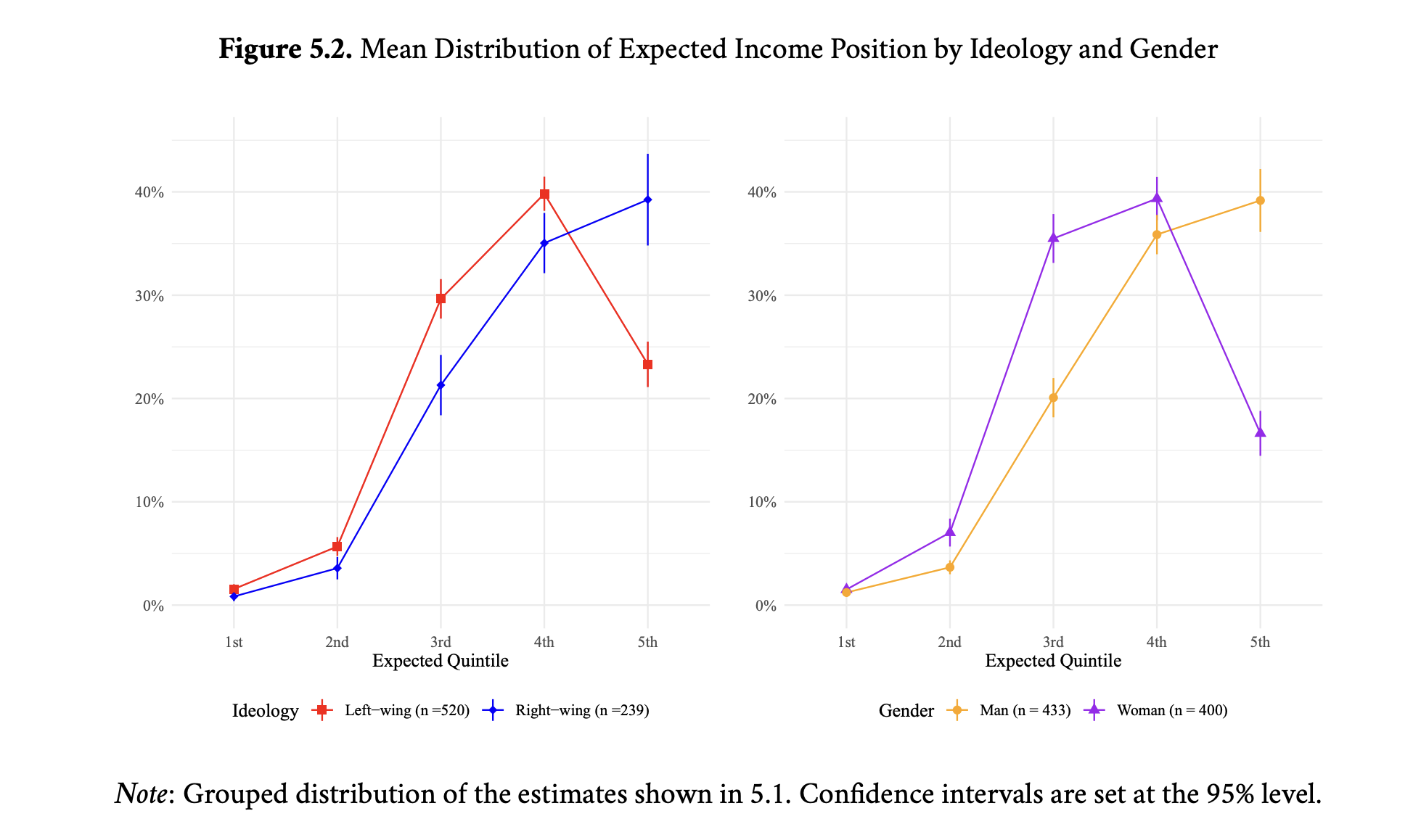
Education is an important indicator of future success. I argue that citizens use their educational degree to infer what future level of income position they will achieve, and internalize this into their current redistributive preferences. I survey Danish students in tertiary education (N = 1,020), where I elicit expectations and redistributive attitudes. I field a customized treatment, which informs the respondent of the average salary after 10 years for people with the same given degree as them and where that salary places them in relative terms in the income distribution. I find that respondents underestimate their future position in the income distribution, and when treated, they become less supportive of redistribution. To assess the generalizability of these findings, I leverage ISSP-data (N=7,542) and see that Denmark is an "ordinary" case in terms of how expectations are developed and correlate with preferences. Further, to test the external validity of my experimental findings, I use data from the Danish Longitudinal Study of Youth (N = 3,104), which tracks a cohort from 1968 to 2004 on their educational expectations and performance. Using a two-ways fixed model, I find that respondents become less concerned with inequality when improving relative to their educational expectations. In sum, I see find that education is an important determinant of expectations and redistributive attitudes. I discuss the macro-level implications of shifting expectations for electoral coalitions and welfare state development.